
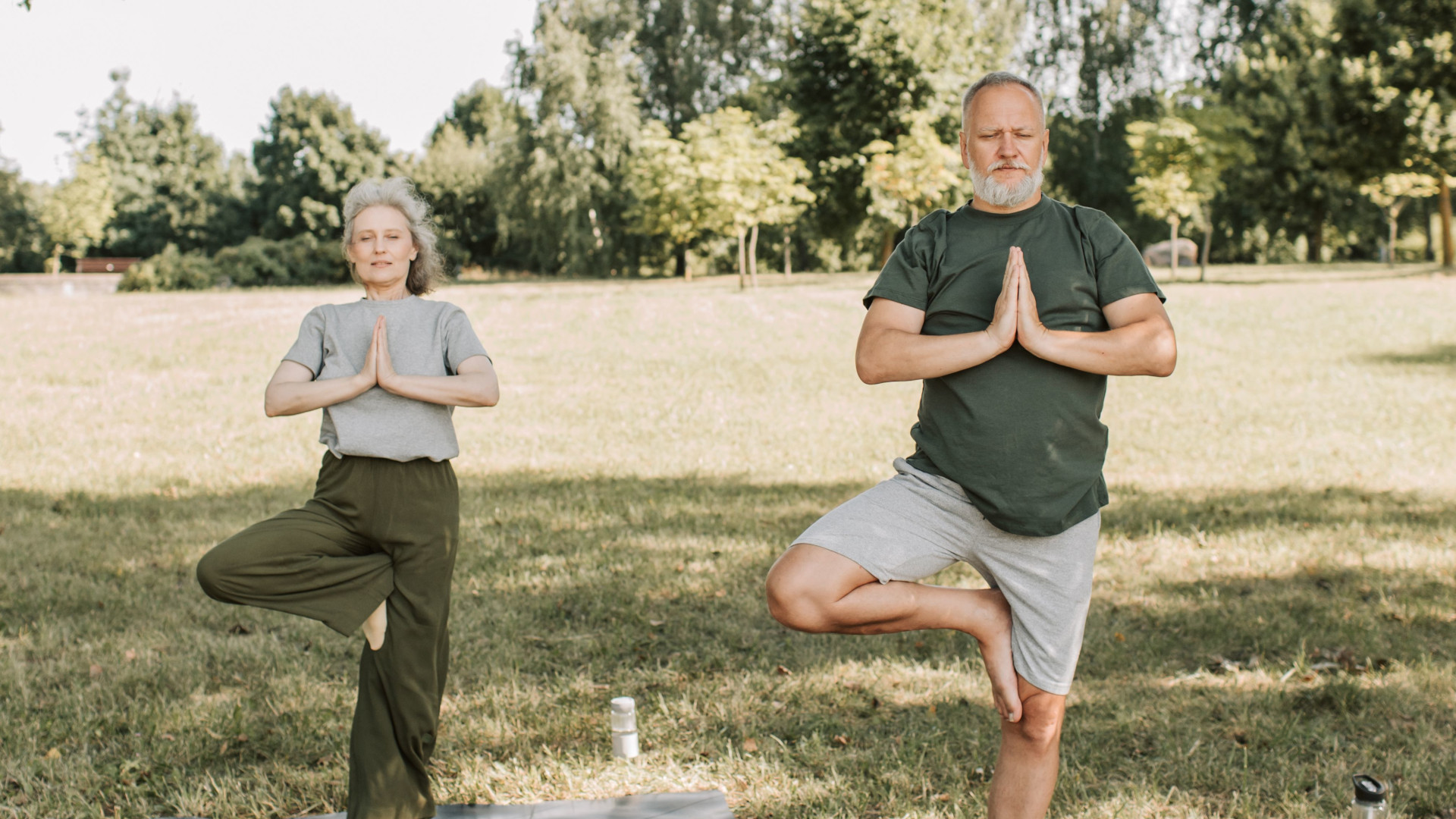
When people think about posture and balance, they often assume they decline with age. While aging can certainly influence strength and mobility, posture and balance are not determined by age alone.
In reality, posture and balance depend on the health and function of multiple systems working together. These include: muscles, bones, joints, the nervous system, and sensory feedback mechanisms.
At BioStrong, many clients begin their journey with bone density in mind. However, one of the most commonly reported changes they notice over time is feeling stronger, steadier, and more confident in their everyday movements.
Good posture is much more than simply standing up straight.
Maintaining proper posture requires:
Every moment of the day, your body makes thousands of small adjustments to keep you upright against gravity. These adjustments rely heavily on the strength and responsiveness of your muscles.
When muscles become weaker, maintaining optimal posture becomes more difficult. This can contribute to many factors changing. Slouching, forward head posture, reduced movement efficiency, and increased strain on the body are a few examples.
Balance depends on communication between several systems:
While many people associate balance with the inner ear, muscles play a critical role in helping the body react to changes in position and maintain stability.
When maintaining balance, muscles must respond quickly and effectively to keep the body upright.
This is one reason why strength and balance are so closely connected.
Balance is often thought of as a simple ability to remain upright. But balance is actually a complex interaction between the nervous system, muscles, joints, vision, and inner ear.
To maintain stability, the body detects subtle changes in position. It then coordinates muscular responses to keep us balanced. This process occurs thousands of times each day, often without conscious awareness.
Whole-body vibration (WBV) has emerged as an area of interest. WBV may help stimulate many of the systems involved in balance and postural control. BioStrong uses vibrational plates to warm up the system for osteogenic loading.
During vibration training, mechanical oscillations are transmitted through the body while standing on a vibration platform. These small, rapid changes in force challenge the neuromuscular system and make the body to continuously make tiny postural adjustments.
Researchers believe this may help improve communication between the nervous system and muscles responsible for maintaining stability.
How Vibration Affects the Nervous System
One proposed mechanism involves stimulation of sensory receptors located in:
These receptors constantly provide the brain with information. This information includes body position, movement, and force production.
This sensory feedback system is known as proprioception, often described as the body's internal awareness of where it is in space.
Improved proprioceptive input may enhance the body's ability to respond to movement challenges. It also may maintain postural control, thus improving balance.
Vibration also appears to increase muscular activation. This is through a phenomenon known as the tonic vibration reflex.
As vibration passes through muscle tissue, sensory receptors called muscle spindles detect the rapid changes in length and tension. These receptors trigger reflexive muscular contractions that help stabilize the body.
As a result, vibration may increase activation of:
Many of the same muscle groups are involved in maintaining posture and balance during everyday activities.
What the Research Shows for Whole Body Vibration
Several systematic reviews and meta-analyses have investigated the effects of whole-body vibration on balance and physical function in older adults.
A systematic review by Sitjà-Rabert et al. found that whole-body vibration training may improve many things. This includes improving balance performance, functional mobility, and lower-extremity strength in older individuals.
Similarly, a meta-analysis by Rogan et al. reported improvements in both static and dynamic balance following vibration-based interventions.
Researchers have also observed improvements in measures of:
following prescribed vibration training programs.
While study results vary, the evidence suggests that vibration may positively influence several physical qualities associated with stability and movement confidence.
One important distinction is that vibration should not be viewed as a substitute for exercise or strength development.
Building muscle has the strongest evidence for improving posture, mobility, and balance.
Researchers generally conclude that vibration is most effective when used alongside other forms of exercise rather than as a stand-alone intervention.
This is particularly important because muscles provide the force necessary to:
In other words, vibration may help stimulate the system, but strength maintains the foundation.
Research demonstrates that strength-focused exercise improves many things. These include physical function, mobility, and balance performance in older adults. Many systematic reviews have found that resistance training improves functional capacity and supports the physical abilities needed for everyday movement.
Strength is important because stronger muscles can:
As muscle strength improves, many individuals experience a greater ability to perform daily activities safely and efficiently.
Bone health and balance are often discussed separately, but they are closely connected.
Individuals with osteopenia, osteoporosis, or age-related muscle loss frequently experience reductions in:
Maintaining musculoskeletal health means supporting both the muscular and skeletal systems together.
Strong muscles help support healthy movement, while strong bones provide the structural framework that allows movement to occur safely.
How Osteogenic Loading May Help
Osteogenic loading uses brief, high-force mechanical loading to stimulate the musculoskeletal system.
At BioStrong, clients perform supervised loading exercises designed to safely challenge major muscle groups throughout the body.
These loading exercises create a stimulus that may contribute to improvements in several physical qualities associated with posture and balance.
Every BioStrong session of osteogenic loading is a chance to use the neuromuscular system to engage as much force and power that is manageable. The brain trains the major muscle groups to engage in high-force loading and recruit large motor units and muscle fibers.
This muscular activation may help support:
The nervous system and muscular system must work together during loading activities.
Research demonstrates that resistance training can improve neuromuscular function in older adults, helping maintain the communication pathways responsible for movement and stability.
Research has shown that strength-focused exercise programs improve functional performance measures in older adults, including activities that are closely related to mobility and independence.
While BioStrong is not a balance-training program, osteogenic loading challenges the musculoskeletal system in a way that may support many of the physical qualities associated with improved stability and movement confidence.
Individual experiences vary, but many BioStrong clients report:
These observations are consistent with the important role strength plays in posture, movement, and physical function.
Most people associate BioStrong with bone health, and for good reason.
However, healthy aging is also about maintaining:
Research continues to show that strength-focused exercise plays an important role in supporting these qualities throughout life.
At BioStrong, our goal is to help clients build stronger bones, stronger muscles, and greater confidence in their bodies.
Our osteogenic loading programs are designed to support:
Stimulating both muscle and bone, osteogenic loading, and vibration exposure, may provide many benefits. These include complementary neuromuscular stimulation that challenges the body's balance and postural control systems. They also provide a unique approach to supporting long-term musculoskeletal health.
While no exercise program can guarantee improvements for every individual, the available evidence suggests that strength-focused training combined with neuromuscular stimulation may support many of the physical qualities associated with healthy posture, balance, and long-term functional independence.
If you are interested in improving your bone health, strength, posture, or physical health, we would be happy to help. Book your free session today! Proudly serving Calgary and the surrounding areas.
📍BioStrong Avenida & Foothills Professional Building
Claudino JG, Afonso J, Sarvestan J, et al. Strength Training to Prevent Falls in Older Adults: A Systematic Review with Meta-Analysis of Randomized Controlled Trials. Journal of Clinical Medicine. 2021.
Sitjà-Rabert M, Rigau D, Fort Vanmeerhaeghe A, et al. Efficacy of Whole Body Vibration Exercise in Older People: A Systematic Review. Archives of Physical Medicine and Rehabilitation. 2012.
Rogan S, Hilfiker R, Herren K, Radlinger L, de Bruin ED. Effects of Whole-Body Vibration on Postural Control in Elderly: A Systematic Review and Meta-Analysis. BMC Geriatrics. 2017.
Bautmans I, Van Hees E, Lemper JC, Mets T. The Feasibility of Whole Body Vibration in Institutionalised Elderly Persons and Its Influence on Muscle Performance, Balance and Mobility. BMC Geriatrics. 2005.
Rees SS, Murphy AJ, Watsford ML. Effects of Whole-Body Vibration Exercise on Lower Extremity Muscle Strength and Power. Sports Medicine. 2008.
Blog
It starts with an initial appointment to discuss your medical history, main health concerns and expectations of BioStrong therapy.
We will help you assess whether a program can help your condition and discuss the details of treatment.
