
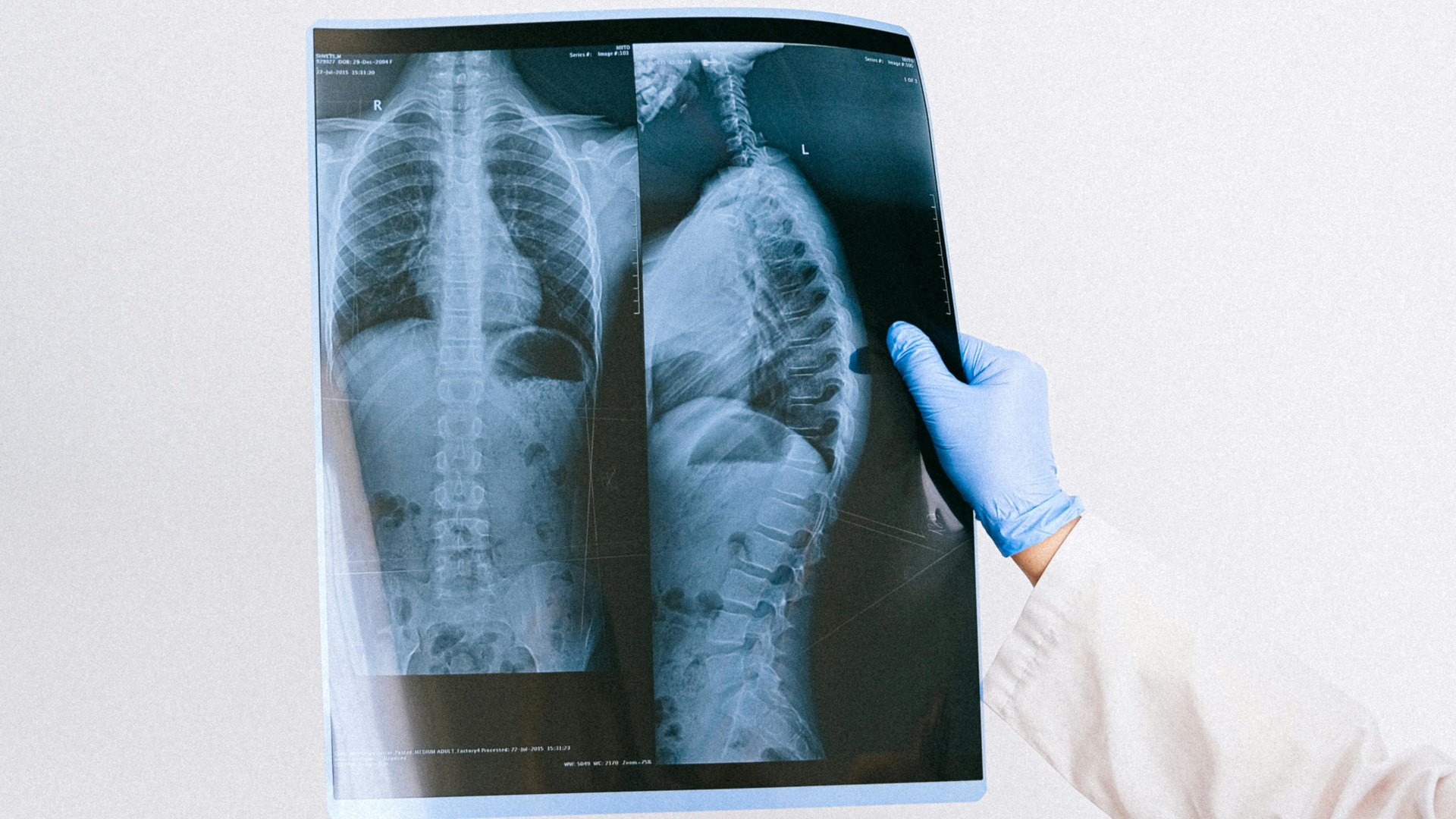
If you’ve been told to get a bone density scan, you’ve likely heard of a DEXA scan.
A newer technology is now available at BioStrong Avenida in Calgary called REMS (Radiofrequency Echographic Multi Spectrometry).
What’s the difference between DEXA and REMS? Are they interchangeable? And which one should you choose?
Let’s break it down clearly.
DEXA (Dual-Energy X-ray Absorptiometry) has been the standard test for measuring bone mineral density (BMD).
DEXA works by:
From this, it generates:
DEXA is widely used in hospitals and diagnostic imaging clinics across Canada.
REMS stands for Radiofrequency Echographic Multi Spectrometry.
REMS works by:
REMS produces:
At BioStrong Avenida, we use the Echolight REMS scanner, a radiation-free diagnostic tool designed to provide accurate and repeatable bone health assessments.
1️⃣ Radiation Exposure
This makes REMS suitable for:
2️⃣ What Is Being Measured
DEXA primarily measures:
REMS evaluates:
This means REMS may provide additional insight into bone fragility beyond mineral content alone.
3️⃣ Degenerative Artifacts
In older adults, DEXA scans of the lumbar spine can be influenced by:
These factors can artificially elevate spine BMD readings.
REMS uses spectral filtering of raw ultrasound signals, which may reduce interference from degenerative artifacts, potentially providing a clearer picture in certain populations.
4️⃣ Longitudinal Tracking
Both DEXA and REMS calculate percentage change using:
(New BMD − Old BMD) ÷ Old BMD × 100
However:
At BioStrong, if you begin with REMS, we recommend follow-up scans using the same system to ensure accurate longitudinal monitoring.
Yes.
Validation studies show REMS measurements to be comparable to DEXA for lumbar spine and femoral neck BMD assessment.
DEXA remains widely accepted in hospital systems and is often required for pharmacological treatment decisions.
REMS offers:
Each has value depending on the clinical situation.
Both DEXA and REMS generate T-scores.
A T-score compares your bone density to an average 30-year-old adult of the same sex:
T-scores are derived from absolute BMD measurements — not the other way around.
At BioStrong, our focus is proactive bone health — not just diagnosis after fracture.
The Echolight REMS scanner allows us to:
For patients engaged in structured mechanical loading programs, REMS allows practical follow-up without radiation concerns.
If your physician specifically requests DEXA, follow their recommendation.
If you are:
REMS may be an excellent option.
Like DEXA, REMS (Radiofrequency Echographic Multi-Spectrometry) provides measurements of bone mineral density (BMD) in g/cm², which allows comparison over time. However, the two technologies analyze data differently.
🦴 1. Comparable Accuracy to DEXA
Studies have shown that REMS correlates well with standard DEXA measurements. REMS can identify osteoporosis with similar diagnostic accuracy:
This means when you scan the same person with REMS at different times (e.g., baseline vs. 6–12 months later), you can calculate percent change much the same way as with DEXA:
🧪 2. REMS Precision and Repeatability
Studies show:
Because REMS excludes artifact data and analyzes raw radiofrequency signals, it can sometimes avoid the false elevation that can occur in DEXA (e.g., due to osteoarthritis or calcification).
🧠 3. Diagnostic Agreement Across Populations
In specific populations (e.g., systemic lupus erythematosus), REMS and DEXA showed moderate correlation in BMD and fracture risk discrimination — supporting its use as a monitoring tool even in complex clinical settings.
Unlike traditional bone-only devices, REMS/Echolight can also estimate body composition parameters during the same scanning session. This includes:
A clinical abstract comparing REMS to standard Bioelectrical Impedance Analysis (BIA) found that REMS provided accurate body fat percentage and metabolic rate estimates that did not differ significantly from BIA measurements — suggesting REMS can be an effective alternative for body composition assessment.
This makes REMS/Echolight a multidimensional tool, giving both bone health and overall body composition data from the same non-radiation scan — valuable for personalized care planning.
BioStrong Avenida is equipped with the Echolight REMS bone density scanner.
If you’d like to:
📞 Call 403.978.9780 🌐 Book a scan online!
Our team is happy to guide you through your options.
Is REMS as accurate as DEXA?
Studies suggest comparable accuracy for lumbar spine and femoral neck BMD measurements.
Can I switch between DEXA and REMS for follow-up?
No. For accurate longitudinal tracking, you must use the same technology consistently.
Is REMS covered by insurance?
Coverage varies. Contact us for details regarding your provider.
Blog
It starts with an initial appointment to discuss your medical history, main health concerns and expectations of BioStrong therapy.
We will help you assess whether a program can help your condition and discuss the details of treatment.
